Equalization Tank Troubleshooting for Variable Industrial Effluent
Industrial wastewater rarely arrives at a treatment plant in a neat, steady stream. Batch dumps, washdowns, sanitation cycles, product changeovers, stormwater intrusion, and production upsets can all hit the system within the same shift. The equalization tank is where that variability should be absorbed before it reaches clarification, biological treatment, dissolved air flotation, membranes, or discharge polishing.
When the equalization tank is working well, operators see steadier flow, more predictable pH, fewer downstream alarms, and less emergency intervention. When it is not working well, the entire plant starts chasing symptoms: pump cycling, odor, floating grease, settled solids, pH excursions, foaming, carryover, and inconsistent treatment performance.
This guide covers a practical troubleshooting sequence for industrial plants handling variable effluent, with attention to where bulk enzyme blends for industrial wastewater treatment may help reduce organic buildup and improve upstream manageability as part of a controlled program.
What the equalization tank is supposed to do
An equalization tank is not just a holding basin. Its value comes from four core functions:
- Hydraulic buffering: smoothing peaks and valleys in flow before downstream equipment.
- Load buffering: reducing sudden changes in organics, suspended solids, grease, surfactants, or cleaning chemicals.
- pH moderation: blending acidic and alkaline streams to reduce correction demand.
- Operational visibility: giving the plant time to detect abnormal influent before it causes wider disruption.
If any of these functions are compromised, the tank may still appear full and operational, but it is no longer protecting the process.
Fast signs that equalization is underperforming
Look for patterns across shifts, not just single alarms. Common indicators include:
- Downstream pH correction systems overfeeding or constantly adjusting.
- Influent pumps short-cycling or running dry after peak events.
- Grease mats or scum layers reforming soon after skimming.
- Heavy solids collecting in corners, near inlet zones, or below inactive mixers.
- Odor spikes after weekends, shutdowns, or high-strength batches.
- Biological treatment upset after production cleaning or chemical dumps.
- Dissolved air flotation performance changing hour by hour.
- Operators increasing chemical feed to compensate for unstable loading.
The equalization tank should reduce variability. If it amplifies variability, start with fundamentals before changing downstream chemistry.
Step 1: Confirm the actual influent pattern
Before adjusting equipment, map what is entering the tank.
Questions to ask production and utilities teams
- Which process areas discharge by batch rather than continuously?
- Are sanitation or clean-in-place cycles timed near shift changes?
- Are high-temperature streams entering during specific windows?
- Are acids, caustics, surfactants, solvents, or disinfectants discharged intermittently?
- Are floor drains, sump pumps, or stormwater connections adding unexpected flow?
- Are production upsets reported to wastewater operations before discharge?
What to review in plant data
- Inlet flow trend by hour and by shift.
- Tank level trend during peak and low production.
- pH trend at inlet, tank, and downstream feed point.
- Pump start-stop frequency.
- Temperature trend.
- Visual observations: grease, foam, solids, color, odor.
- Downstream alarms after known production events.
A daily average can hide the problem. Equalization issues are usually caused by short-duration spikes.
Step 2: Diagnose poor mixing and stratification
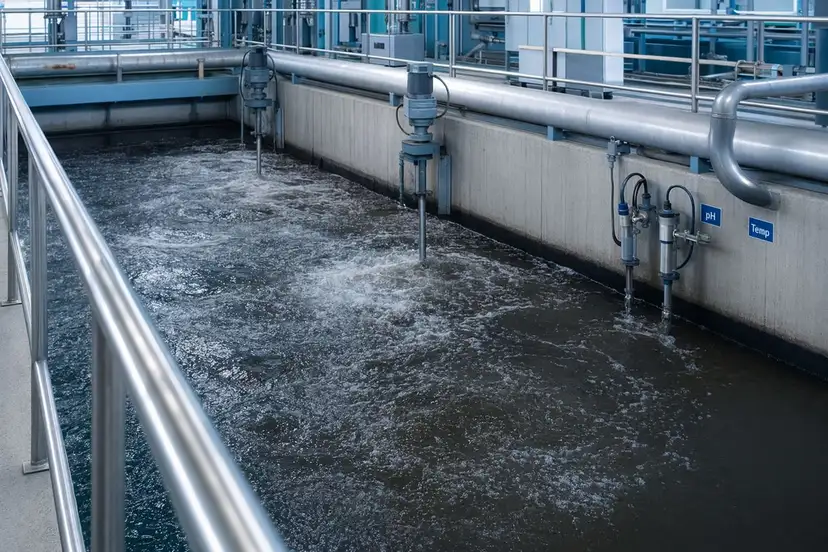
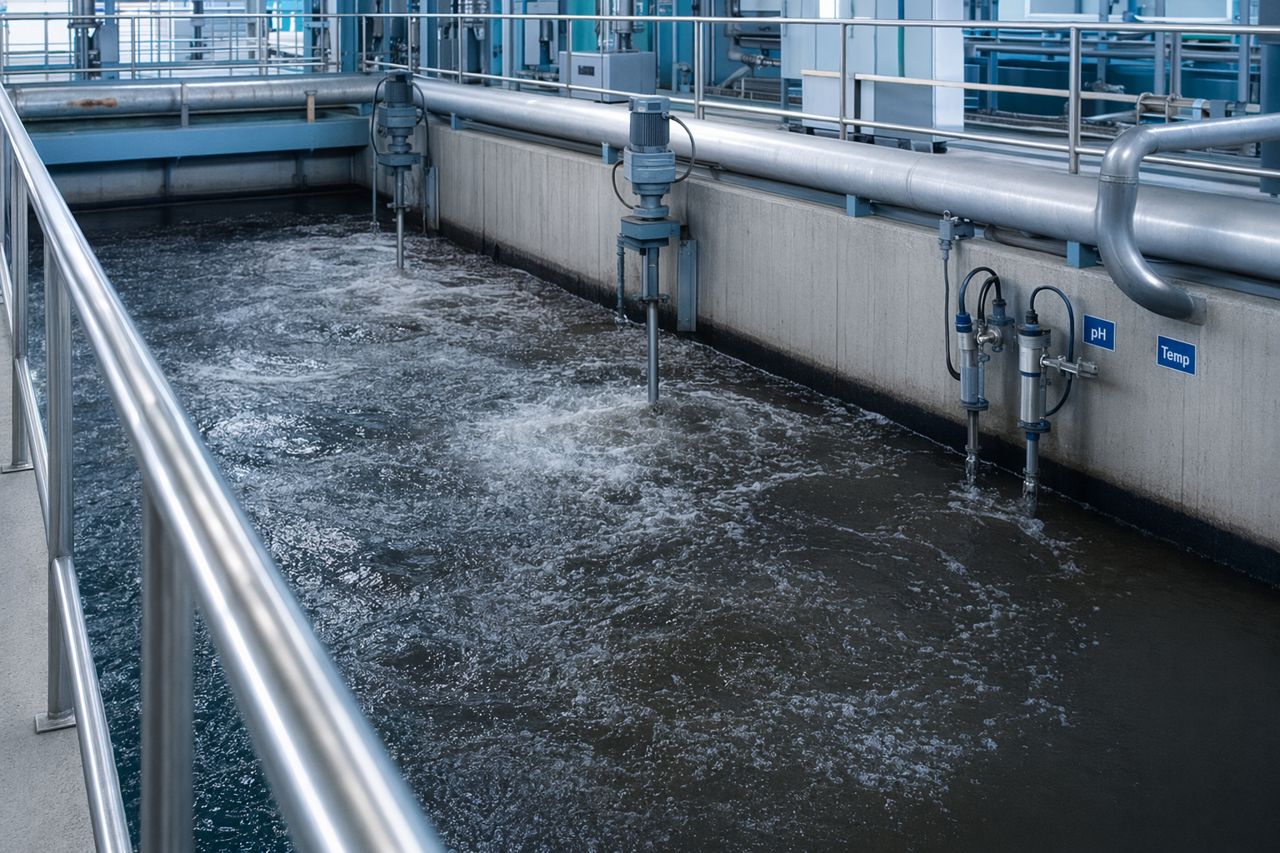
A tank can have adequate volume but poor equalization if the contents are not being blended. Stratification creates layers: acidic or alkaline pockets, warm and cool zones, grease at the surface, dense solids near the floor, and variable feed to downstream treatment.
Symptoms of stratification
- Grab samples differ greatly by depth or location.
- pH reads stable at one point but downstream pH swings continue.
- Floating grease layer remains undisturbed while lower liquid circulates.
- Solids settle near the inlet or in dead zones.
- Odor appears when the tank level drops and old material is exposed.
- Downstream feed changes quality after mixer maintenance or level changes.
Practical checks
- Verify every mixer or recirculation loop is actually operating under load.
- Inspect for blocked nozzles, worn impellers, air binding, or damaged draft tubes.
- Confirm mixer placement addresses corners, not just the center of the tank.
- Check whether mixing is effective at low tank level and high tank level.
- Compare samples from inlet zone, outlet zone, surface, mid-depth, and near-bottom.
Buyer value
Correcting mixing often reduces downstream chemical overuse, lowers operator response time, and improves confidence in process data. It can also reveal whether grease or solids problems are truly influent-driven or caused by tank hydraulics.
Step 3: Control pH swings before they reach sensitive processes
Variable industrial effluent can move from acidic to alkaline within minutes. Equalization should reduce that change rate. If pH swings are passing through the tank, the root cause may be inadequate mixing, undersized buffer volume, poor sensor placement, or uncontrolled batch release.
Troubleshooting pH instability
- Compare pH at the inlet, in-tank, and downstream transfer point.
- Confirm probes are clean, calibrated, and installed where flow is representative.
- Look for batch discharges from cleaning, neutralization, plating, food processing, textile, pulp, chemical, or formulation operations.
- Check whether chemical dosing is reacting to a localized pocket rather than the blended tank.
- Review whether recirculation is on during off-shifts and weekends.
What to avoid
Do not solve poor equalization with aggressive chemical correction alone. If the tank is stratified, a controller may chase false readings, increasing cost and sometimes worsening the downstream upset.
Step 4: Address grease layers and floating organics
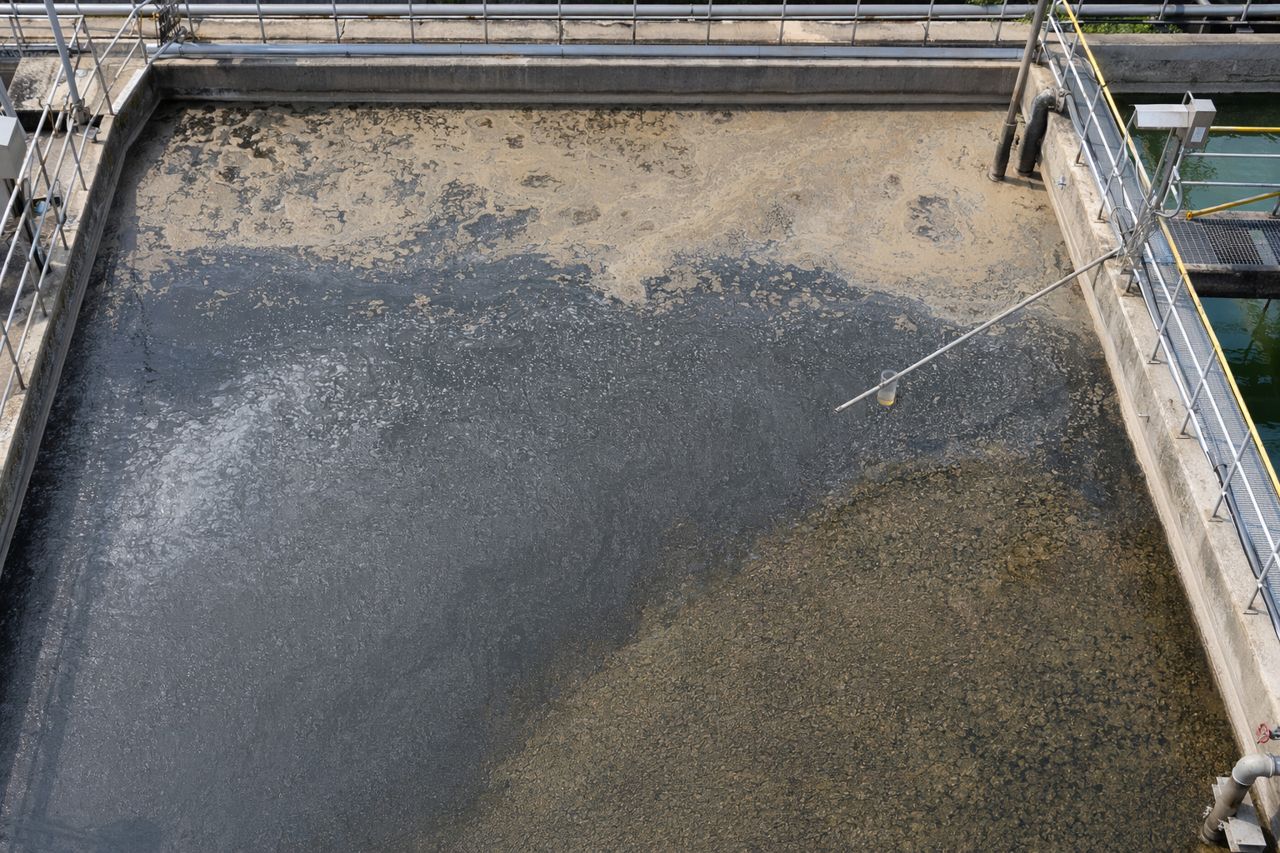
Grease, oils, fats, surfactants, and emulsified organics can collect on the surface of equalization tanks. A floating layer can trap odor, interfere with level readings, coat walls, blind pumps, and create inconsistent loading to dissolved air flotation or biological treatment.
Common causes
- Warm greasy wastewater cooling in the tank.
- Surfactants keeping oil partially emulsified until conditions change.
- Insufficient surface turnover.
- Infrequent skimming or poor access for removal.
- High-strength production batches entering too quickly.
- Grease entering from floor drains, interceptors, or process washdown.
Troubleshooting actions
- Confirm upstream grease interceptors or screens are maintained.
- Increase surface observation during known discharge windows.
- Check whether mixers are pushing grease to a dead corner rather than dispersing it.
- Remove thick accumulated layers before they become a recurring seed layer.
- Evaluate whether a targeted enzyme program can reduce recurring organic buildup in upstream drains, sumps, or equalization zones.
Where enzyme blends can support operations
Enzyme blends are not a substitute for screening, skimming, pH control, or hydraulic capacity. However, a well-matched bulk enzyme blend can help plants manage certain recurring organic deposits, grease-associated buildup, and odor-prone residues. For B2B buyers, the value is operational: fewer manual cleanouts, cleaner transfer lines, more predictable organic loading, and better resilience during routine production variability.
The right fit depends on wastewater character, residence time, temperature range, pH exposure, sanitation chemistry, and where the product will be introduced.
Step 5: Remove settled solids and dead zones
Settled solids reduce working volume and create anaerobic pockets. Over time, the tank may look like it has enough capacity while its usable volume has quietly declined.
Signs of solids accumulation
- Tank level rises faster than expected during peak flow.
- Pumps clog or pull grit, sludge, or fibers.
- Odor is strongest after level drawdown.
- Bottom samples show black solids or gas release.
- Tank cleanout volume is much higher than expected.
What to check
- Inlet velocity and whether solids are dropping immediately at the entry point.
- Screen performance upstream of equalization.
- Mixer coverage near the floor.
- Pump suction elevation and protection from settled material.
- Cleanout schedule versus actual solids loading.
A tank with settled solids is also harder to sample accurately. Data may look inconsistent because the tank contents are inconsistent.
Step 6: Stabilize pump cycling and transfer flow
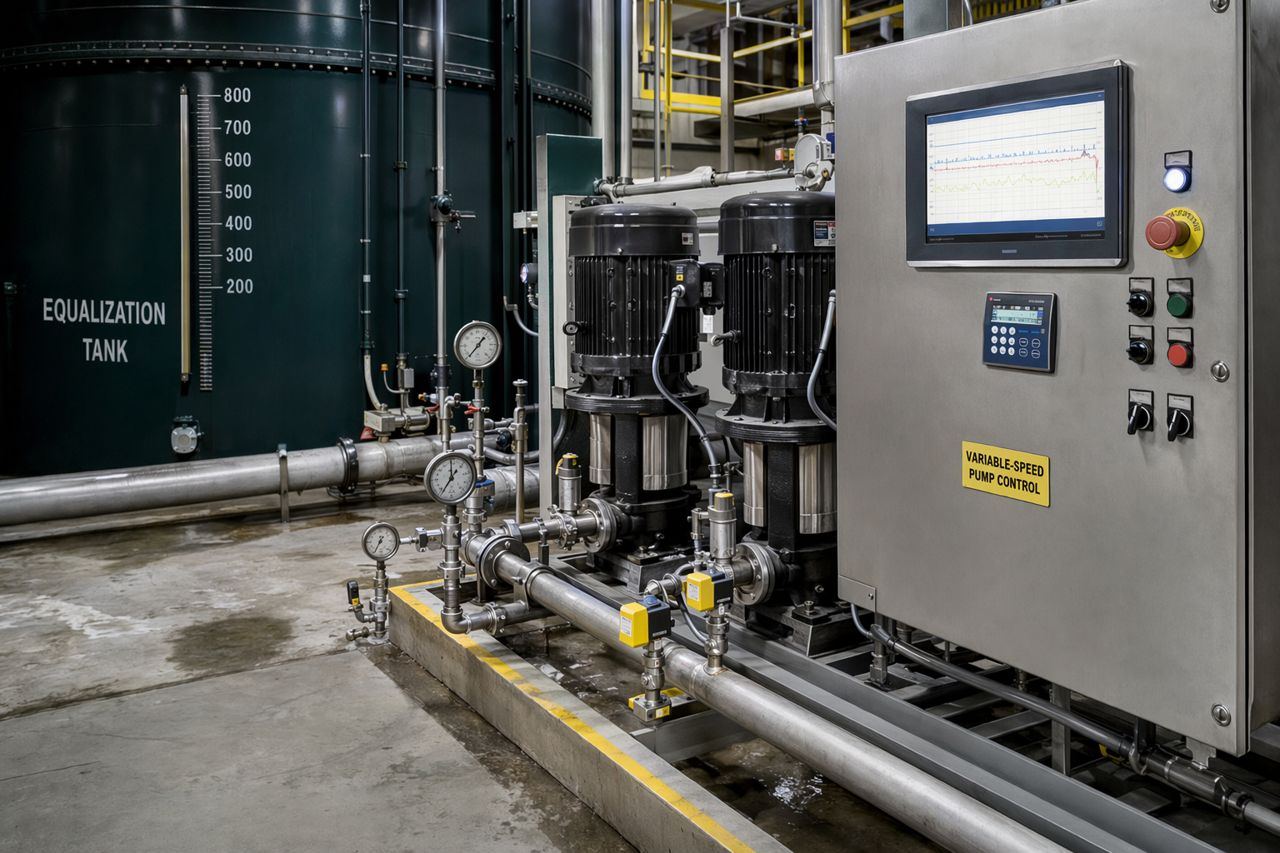
Equalization only protects downstream equipment if transfer flow is controlled. Short-cycling pumps can send slugs of concentrated wastewater forward, even if the tank itself has adequate volume.
Pump-related causes of instability
- Level controls set too close together.
- Variable-speed drives not tuned to downstream acceptance rate.
- Pump capacity too large for normal flow.
- Suction blockage from grease or solids.
- Air entrainment at low tank level.
- Multiple pumps alternating without matched performance.
Practical improvements
- Widen control bands where safe and appropriate.
- Use steady transfer rates when downstream processes benefit from consistency.
- Review pump run trends against downstream pH, flow, and loading changes.
- Inspect suction points during low-level operation.
- Confirm standby pump logic does not create unintended surges.
For many plants, pump control is the missing link between a good equalization design and poor day-to-day performance.
Step 7: Prepare for shock loads instead of reacting to them
Shock loads are not always accidents. Many are predictable production events that wastewater teams are not told about early enough.
Examples of shock loads
- Sanitation chemicals released after a production run.
- Product loss to drain after line clearing.
- High-strength washwater from tank cleaning.
- Concentrated brine, sugar, starch, protein, dye, oil, or surfactant discharge.
- Temperature spikes from hot washdown.
- Weekend stagnation followed by Monday restart.
Better shock-load management
- Establish a discharge notification process between production and wastewater operations.
- Hold or meter known high-strength batches when possible.
- Keep equalization mixing active before, during, and after expected events.
- Use tank level strategy to reserve buffer capacity ahead of scheduled dumps.
- Add temporary monitoring during recurring high-risk windows.
The lowest-cost improvement may be communication. A 15-minute warning can prevent hours of downstream correction.
Monitoring routine for equalization tank reliability
A simple routine, done consistently, can prevent most surprises.
Every shift
- Check tank level trend, not just current level.
- Observe surface condition: grease, foam, solids, color, odor.
- Confirm mixers, recirculation, and pumps are operating as intended.
- Review pH and temperature trends.
- Note any production events or unusual discharges.
Daily
- Compare inlet and outlet variability.
- Review pump start frequency and runtime.
- Inspect screens, sumps, grease traps, and transfer points.
- Record visible solids or scum accumulation.
- Confirm chemical feed systems are responding to representative readings.
Weekly
- Take location-based samples if stratification is suspected.
- Review trends with production, maintenance, and environmental teams.
- Check mixer and pump maintenance indicators.
- Update the list of recurring high-strength discharge events.
- Evaluate whether manual cleanout frequency is increasing.
Monthly or after major upsets
- Reassess working volume and solids accumulation.
- Review whether operating setpoints match current production volumes.
- Inspect tank access, safety, sensors, and mechanical equipment.
- Validate whether enzyme, nutrient, chemical, or pretreatment programs are still aligned with current wastewater conditions.
Troubleshooting table: symptom, likely cause, first action
| Symptom |
Likely cause |
First action |
| pH swings downstream |
Stratification, poor probe location, batch discharge |
Compare pH by tank location and discharge timing |
| Grease layer returns quickly |
High grease loading, cooling, poor surface turnover |
Inspect upstream sources and remove accumulated layer |
| Pumps short-cycle |
Narrow level band, oversized pump, control issue |
Review trend data and adjust control strategy |
| Odor after weekends |
Stagnation, settled solids, low mixing |
Keep circulation active and inspect bottom solids |
| Solids in pump suction |
Dead zone, failed screening, settled sludge |
Inspect inlet screening and suction elevation |
| DAF performance unstable |
Variable loading from equalization |
Stabilize transfer flow and investigate tank mixing |
| Biological process upset |
Shock load, disinfectant, pH or temperature spike |
Trace production events and tank trend history |
| Chemical cost rising |
Controller chasing variable influent |
Verify equalization before increasing dosing rates |
When to evaluate a bulk enzyme blend
Consider an enzyme support program when the plant has recurring organic buildup, grease-associated deposits, odor-prone residues, or upstream collection areas that repeatedly foul despite mechanical maintenance.
A technical review should clarify:
- Wastewater sources and daily variability.
- Target problem: grease, starch, protein, cellulose, general organic film, or odor-associated residue.
- Application point: drain network, sump, lift station, equalization tank, or upstream interceptor.
- Expected residence time before harsh pH, heat, disinfectants, or separation chemistry.
- Compatibility with existing coagulants, polymers, oxidizers, biocides, and cleaning schedules.
- Storage, handling, tote or drum logistics, and replenishment frequency.
For procurement teams, the best enzyme program is not the one with the most dramatic claim. It is the one that fits the plant’s process window, reduces practical maintenance burden, and supports a measurable operational outcome.
What a supplier should ask before quoting
A serious supplier should ask more than annual volume. Be ready to discuss:
- Industry segment and wastewater sources.
- Main pain point and current maintenance cost.
- Equalization tank volume, retention pattern, and transfer strategy.
- pH and temperature range.
- Presence of grease, solids, surfactants, salts, cleaners, or disinfectants.
- Current pretreatment equipment.
- Packaging preference: pails, drums, totes, or bulk delivery.
- Site safety and storage requirements.
- Trial goals and success criteria.
This information helps align product selection, application guidance, and commercial terms with real plant conditions.
Practical takeaway
Equalization tank problems are rarely caused by one factor. Mixing, pH, grease, solids, pump control, and production scheduling all interact. The best troubleshooting approach is sequential: confirm the influent pattern, verify mixing, stabilize transfer, remove accumulated material, and then evaluate chemical or enzyme support where it can deliver concrete value.
If your plant is dealing with recurring grease buildup, organic deposits, odor-prone residues, or unstable loading, our technical team can help review your wastewater conditions and recommend a bulk enzyme blend strategy suited to industrial operation.
Need a quote for an industrial wastewater enzyme blend? Use the on-site request form to share your application details, target problem, packaging needs, and expected volume: request a quote.