Grease-Trap FOG Audit Checklist for Industrial Sites
Fats, oils, and grease can look like a housekeeping issue at the trap, but the real cost often appears downstream: restricted lines, unstable equalization, higher haul-out frequency, DAF performance swings, odors, and avoidable operator callouts.
This checklist is built for industrial wastewater teams that need a practical way to audit FOG at the source, confirm whether grease traps are being managed correctly, and identify where a biological support program may reduce day-to-day variability. For sites evaluating bulk enzyme blends for industrial wastewater treatment, the best starting point is not a product discussion. It is a clear map of where FOG enters, how it behaves, and what it disrupts.
How to Use This Checklist
Walk the process from the production floor to the downstream treatment equipment. Capture observations during normal operation and during peak discharge periods. A useful audit should include:
- Production or sanitation schedule for the audit day
- Grease-trap cleaning records
- Waste hauler tickets or pump-out notes
- Line blockage history
- Operator comments from the DAF, EQ tank, and lift stations
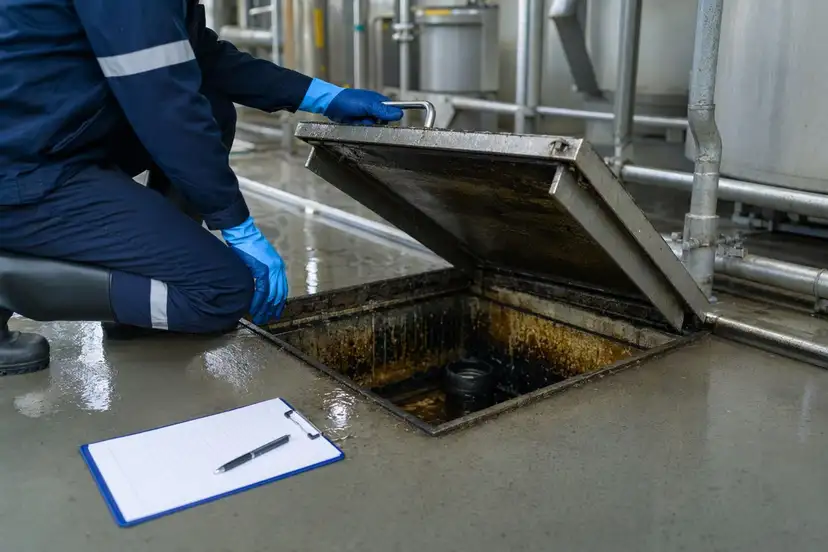
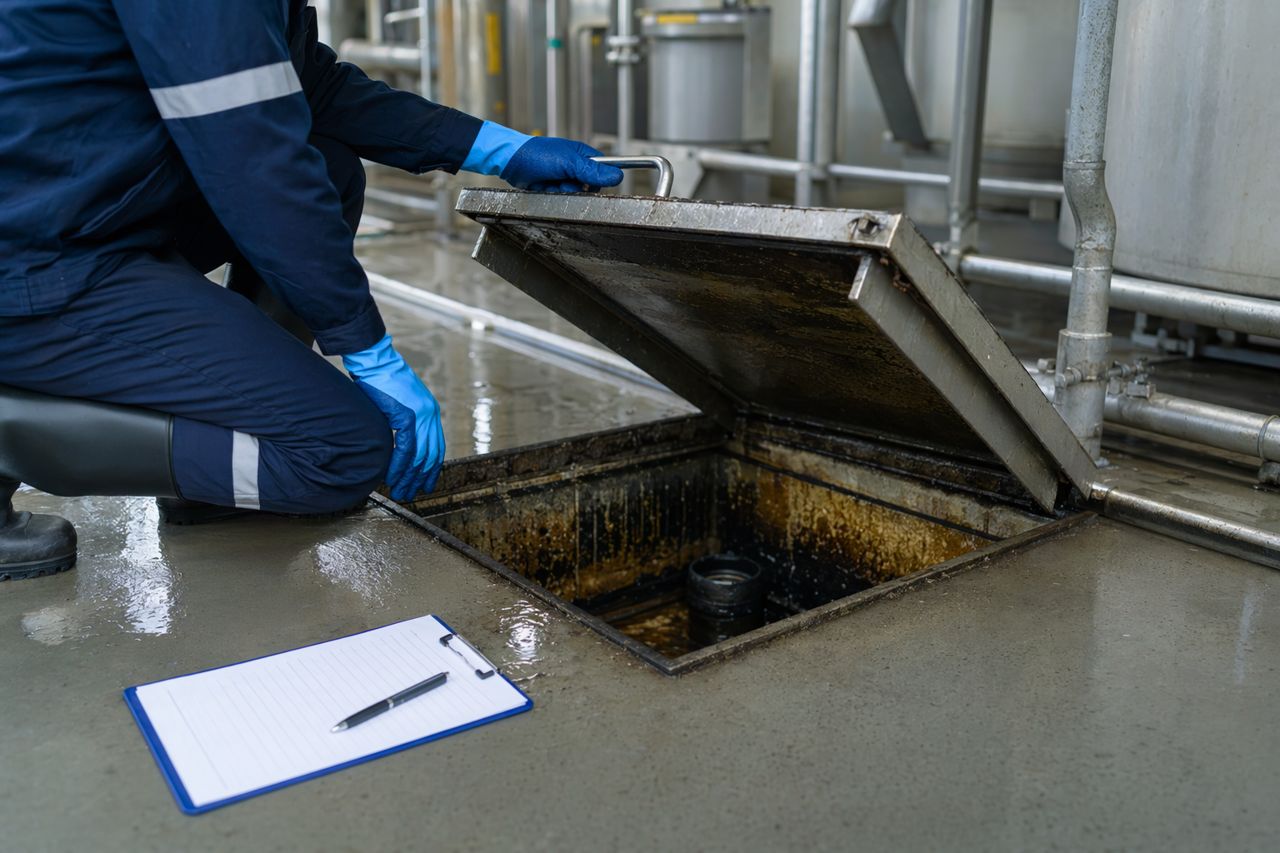
- Photos of grease caps, inlet conditions, and problem areas
The goal is to separate one-time maintenance issues from recurring FOG loading patterns.
1. Identify All Inlet Sources
Start at the trap inlet, then work upstream. Industrial FOG problems are often blended from multiple small sources rather than one obvious discharge point.
Check for common FOG contributors
- Frying, rendering, cooking, or oil-handling areas
- Meat, seafood, dairy, bakery, or ready-meal production lines
- CIP and sanitation discharge points
- Floor drains in high-fat processing zones
- Mop sinks, washdown stations, and equipment rinse areas
- Outdoor oil storage, tote handling, or spill-prone transfer points
- Maintenance areas where lubricants may enter drains
Questions to ask operators
- Which production runs create the heaviest grease loading?
- Are there specific shifts where odors or backups increase?
- Does sanitation discharge hot water, detergents, or emulsified soils into the trap?
- Have raw materials, cleaning chemistry, or production schedules changed recently?
Audit note
If inlet loading changes by product run, a fixed cleaning interval may not be enough. A trap that performs acceptably during light production can be overwhelmed during high-fat campaigns.
2. Review Cleaning Frequency and Removal Quality
Pump-out frequency matters, but removal quality matters just as much. A trap can be serviced regularly and still perform poorly if settled solids, wall buildup, or inlet/outlet restrictions remain.
Review records
- Date and time of each cleaning
- Approximate volume removed
- Notes on grease thickness and solids level
- Any comments about difficult access, heavy odor, or unusual material
- Evidence that the trap was fully evacuated and rinsed as required by site procedure
Inspect after cleaning
- Grease left on baffles or walls
- Settled sludge that reduces working volume
- Damaged or missing baffles
- Inlet and outlet tees blocked by congealed grease
- Short-circuiting flow paths
- Standing material that reforms quickly after pump-out
Warning signs
- Grease cap returns shortly after cleaning
- Operators increase pump-outs but line fouling continues
- Downstream DAF loading remains inconsistent after trap service
- Trap odors return within days
3. Account for Temperature Effects
Temperature changes can shift FOG behavior quickly. Hot discharge may keep grease mobile through the trap, while cooler pipe sections can cause fats to congeal and attach to line walls.
Temperature-related observations
- Hot sanitation water entering near the end of a shift
- Grease moving past the trap before cooling
- Line restrictions in cooler outdoor or below-grade runs
- Seasonal increases in fouling during colder months
- DAF feed changes after hot washdown cycles
Practical audit questions
- Are peak grease loads paired with hot water discharge?
- Does the trap receive hot flows that reduce separation time?
- Are long conveyance lines cooling the wastewater before treatment?
- Do blockages occur in specific sections with lower ambient temperature?
Audit note
Temperature can make the same FOG load behave differently from week to week. A good audit connects production timing, sanitation timing, and pipe route conditions.
4. Inspect Line Fouling and Flow Restrictions
FOG control is not limited to the grease trap. Once fats coat pipe walls, they can capture solids, narrow the effective pipe diameter, increase odor risk, and create recurring maintenance work.
Areas to inspect
- Grease-trap inlet line
- Outlet line and downstream cleanouts
- Lift station wet wells
- Equalization tank inlet zones
- Low-slope pipe runs
- Bends, reducers, and dead legs
- Sections with known backup history
Signs of line fouling
- Slow drainage from production areas
- Repeated jetting in the same pipe sections
- Floating grease pieces appearing downstream
- Odor complaints near cleanouts or wet wells
- Solids accumulation where grease is present
- Pump ragging or coating in lift stations
Audit note
If jetting provides only short relief, the site may be dealing with ongoing FOG deposition rather than a single blockage. Document repeat locations and compare them against production and cleaning schedules.
5. Evaluate Grease Cap Formation
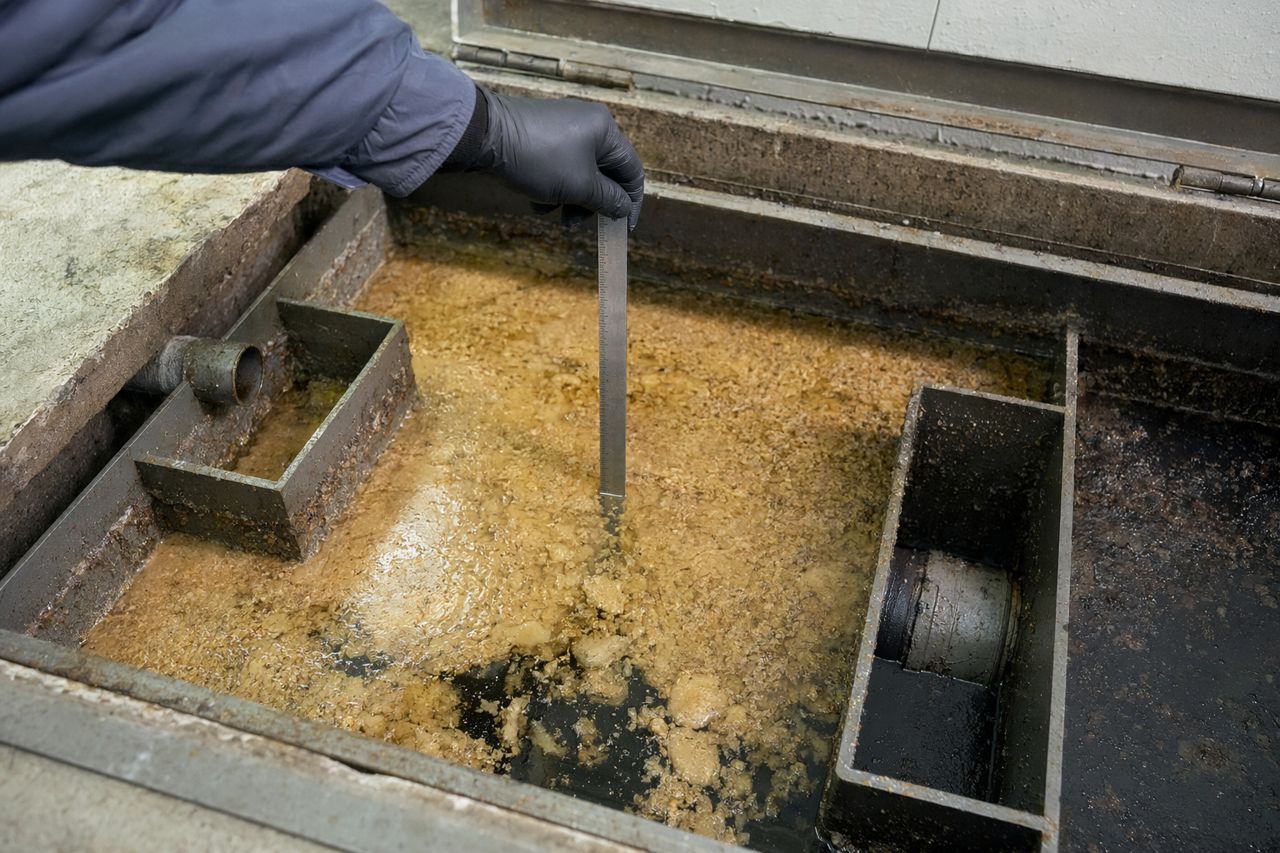
A stable grease cap is common in traps, but excessive, fast-forming, or unusually dense caps can signal under-sized retention, high loading, poor separation, or disrupted downstream performance.
Observe the cap safely
- Thickness and coverage across the trap
- Texture: soft, waxy, rubbery, crumbly, or emulsified
- Odor intensity
- Presence of food solids or grit
- Whether the cap blocks baffles or outlet structures
- How quickly it reforms after cleaning
What cap behavior may indicate
- Soft, mobile cap: warm flows or emulsified oils may be passing forward.
- Hard, waxy cap: cooling and solidification may be occurring in the trap or lines.
- Solids-rich cap: screening or source control may need attention.
- Rapid cap return: inlet loading may exceed the current service interval.
Audit note
Photograph the cap before cleaning and again during the next inspection. Visual comparison is often more useful than isolated notes.
6. Check Downstream DAF Impact
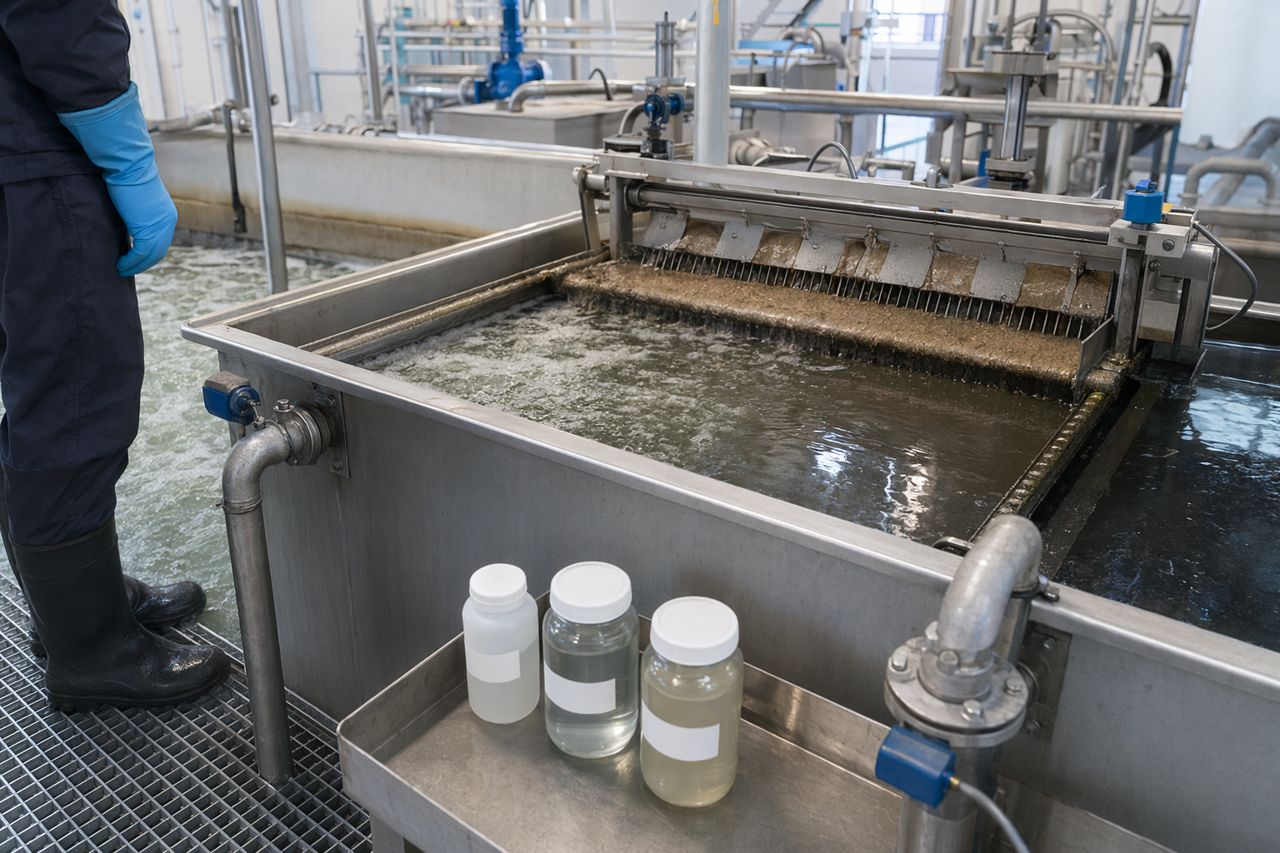
FOG that escapes the trap can destabilize dissolved air flotation performance. The DAF may still remove material, but operators may see higher chemical demand, inconsistent float, heavier sludge, or poor clarity during peak events.
Ask the DAF team
- Does float quality change after certain production runs?
- Are chemical settings adjusted frequently to maintain performance?
- Does whitewater, recycle flow, or sludge handling become less stable after sanitation?
- Are operators seeing more carryover during high-FOG periods?
- Is DAF sludge volume increasing without a clear production explanation?
Look for operating symptoms
- Greasy sheen at DAF inlet or outlet
- Heavy, sticky float that is hard to skim
- Variable floc formation
- Odor around sludge handling areas
- Increased cleaning of skimmers, pumps, and pipework
- More operator attention during known FOG events
Audit note
Do not evaluate the trap in isolation. If DAF performance swings line up with trap loading, sanitation discharge, or line fouling events, the FOG management strategy needs to cover the whole route.
7. Confirm Housekeeping and Source Control
Many FOG problems are made worse before wastewater reaches the trap. Source control reduces load, protects downstream equipment, and improves the value of any treatment program.
Housekeeping checks
- Dry cleanup before washdown where practical
- Screens or baskets maintained at drain points
- Oil spills captured before entering drains
- Production staff trained on drain protection
- Clear responsibility for trap inspection and escalation
- Sanitation procedures that avoid pushing large grease loads at once
Procurement and operations checks
- Have ingredient or raw material changes increased FOG loading?
- Are cleaning chemicals creating more emulsified grease?
- Are contractors following the same drain protection rules as employees?
- Is wastewater feedback shared with production supervisors?
8. Decide Whether Biological Support May Help
After the audit, some sites find that mechanical cleaning alone is not addressing recurring grease films, odor, and downstream variability. In those cases, enzyme-based biological support may be considered as part of a broader FOG management plan.
Bulk enzyme blends for industrial wastewater treatment are commonly evaluated for their ability to support organic breakdown, reduce persistent grease accumulation, and improve day-to-day maintainability in traps, lines, lift stations, and pretreatment areas. The best fit depends on wastewater composition, retention time, temperature range, cleaning chemistry, and where the site wants operational relief.
Good candidate conditions
- Recurring grease buildup between pump-outs
- Line fouling that returns after jetting
- Odor linked to trapped organic material
- DAF variability related to upstream FOG release
- High operator time spent on grease-related cleaning
- A need for bulk supply and repeatable dosing support
Conditions to correct first
- Broken baffles or hydraulic short-circuiting
- Severe under-sizing of grease-trap capacity
- Uncontrolled oil dumping
- Poor solids screening
- Inconsistent pump-out practices
- Discharges that are incompatible with biological activity
Field Audit Summary Template
Use this quick summary to turn observations into action.
| Audit Area |
What to Record |
Action Priority |
| Inlet sources |
Main FOG contributors, peak shifts, sanitation timing |
High if loading is variable or uncontrolled |
| Cleaning frequency |
Service interval, removal quality, cap return time |
High if grease returns quickly |
| Temperature effects |
Hot discharge, cold pipe runs, seasonal changes |
Medium to high if fouling is location-specific |
| Line fouling |
Repeat blockage points, jetting history, lift station coating |
High if maintenance is recurring |
| Grease cap |
Thickness, texture, odor, solids content |
Medium to high depending on cap behavior |
| DAF impact |
Float quality, chemical adjustment, carryover, sludge handling |
High if treatment stability is affected |
| Source control |
Dry cleanup, spill prevention, drain protection |
High if avoidable FOG is entering drains |
Request a Quote for Bulk Enzyme Support
If your audit shows recurring grease buildup, line fouling, or DAF instability, our team can help review the application and recommend a bulk enzyme blend approach for industrial wastewater treatment.
Use the on-site request a quote form and include your wastewater source, target problem area, current cleaning routine, and any downstream treatment concerns. We will respond with a practical supply recommendation for your plant.