Industrial Park Pretreatment: Managing Multiple Wastewater Contributors
Industrial parks concentrate diverse wastewater streams into one shared compliance challenge. A food processor, packaging plant, logistics wash bay, and light manufacturer may all discharge to the same pretreatment system, but their flows, soils, chemistry, and peak discharge times can be completely different.
That variability creates operational risk: grease slugs, pH swings, organic loading spikes, settleability issues, odors, downstream surcharge costs, and disputes over who caused what. For industrial park operators, the goal is not only to keep the treatment system stable. It is to build a defensible management plan that connects tenant behavior to measurable impact.
For facilities evaluating bulk enzyme blends for industrial wastewater treatment, the best results come when biological support is paired with discharge mapping, grease control, monitoring, and clear cost allocation.
Why shared industrial pretreatment is different
A single-owner facility can trace most wastewater problems back to one production schedule. Industrial parks rarely have that simplicity.
Common complications include:
- Multiple tenants discharging at different times of day
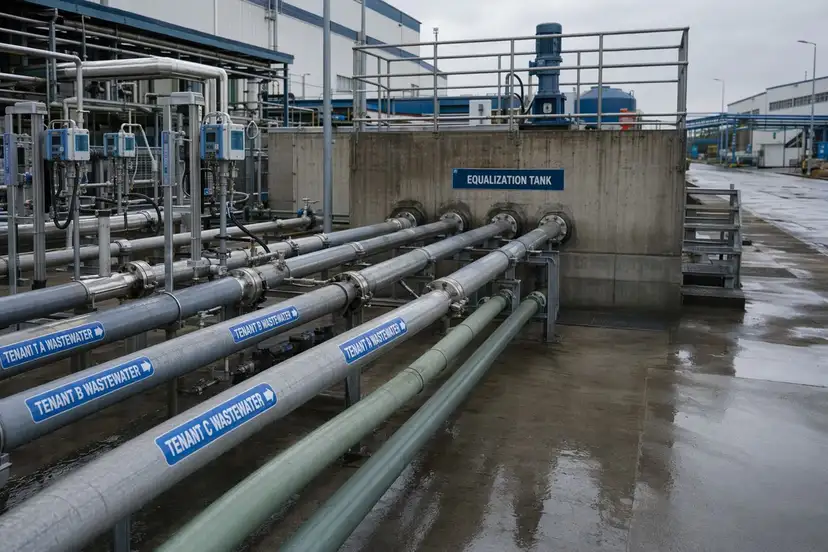
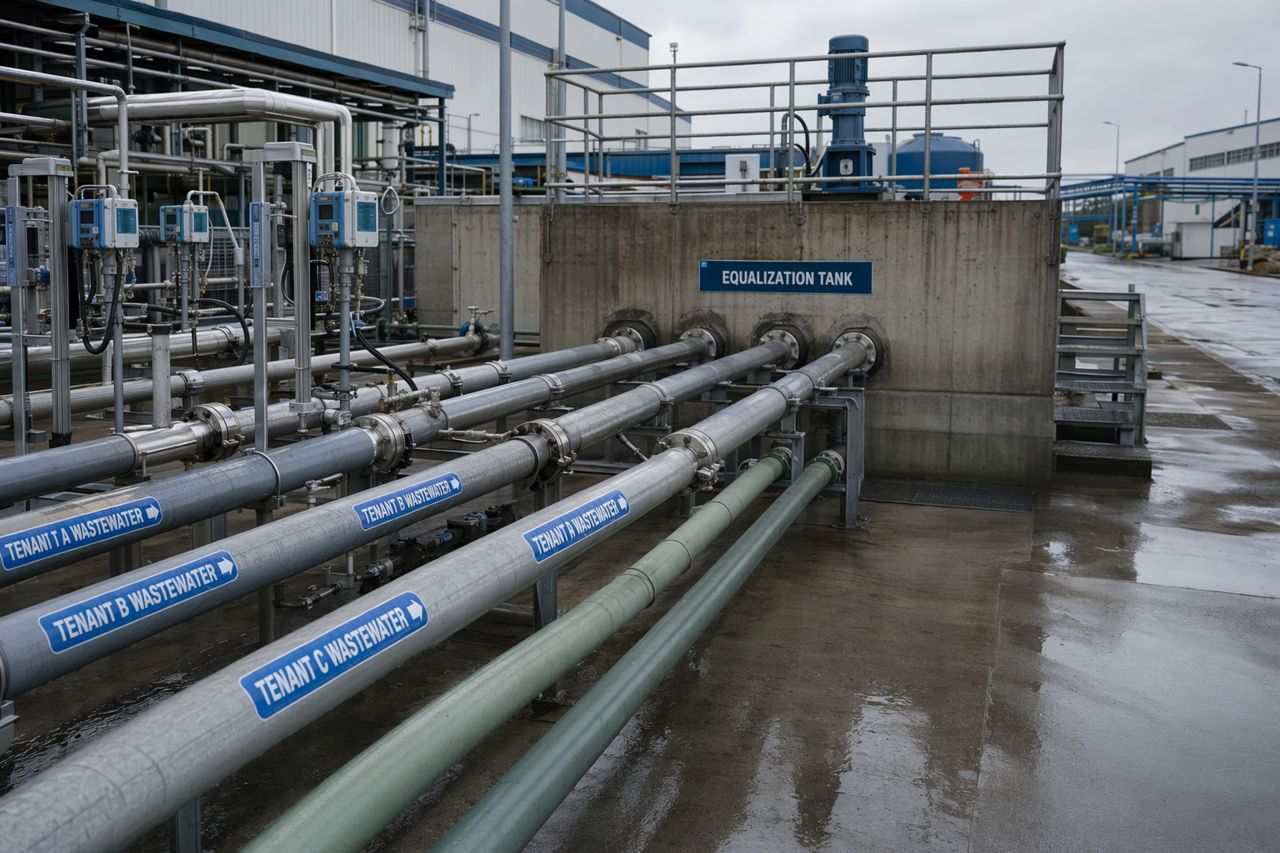
- Mixed wastewater types entering shared lift stations or equalization tanks
- Unreported process changes, cleanouts, or product changeovers
- Grease, starch, protein, oil, detergent, and solids loading from different sources
- Limited visibility into tenant-side plumbing before the shared line
- Cost disputes when municipal surcharges or hauled-waste expenses increase
The pretreatment plant becomes the point where all upstream decisions meet. Without structure, the operator is left reacting to symptoms instead of managing causes.
Start with tenant discharge mapping
A discharge map is the foundation for pretreatment control. It does not need to be complicated at first, but it must be specific enough to support decisions.
What to document
For each tenant, record:
- Production or operating schedule
- Discharge points and floor drain connections
- Major wastewater contributors, such as washdown, CIP, cooling, rinsing, or equipment cleaning
- Expected high-strength materials, including fats, oils, grease, starches, proteins, solvents, detergents, or suspended solids
- Batch release practices and holding tank volumes
- Known seasonal or campaign-based changes
- Existing pretreatment equipment, such as screens, interceptors, pH adjustment, or oil-water separation
This map helps identify which tenants are likely to contribute hydraulic peaks, organic peaks, grease slugs, or chemistry shocks. It also gives the park a practical basis for conversations, permits, lease language, and chargeback models.
Grease control is a shared-system priority
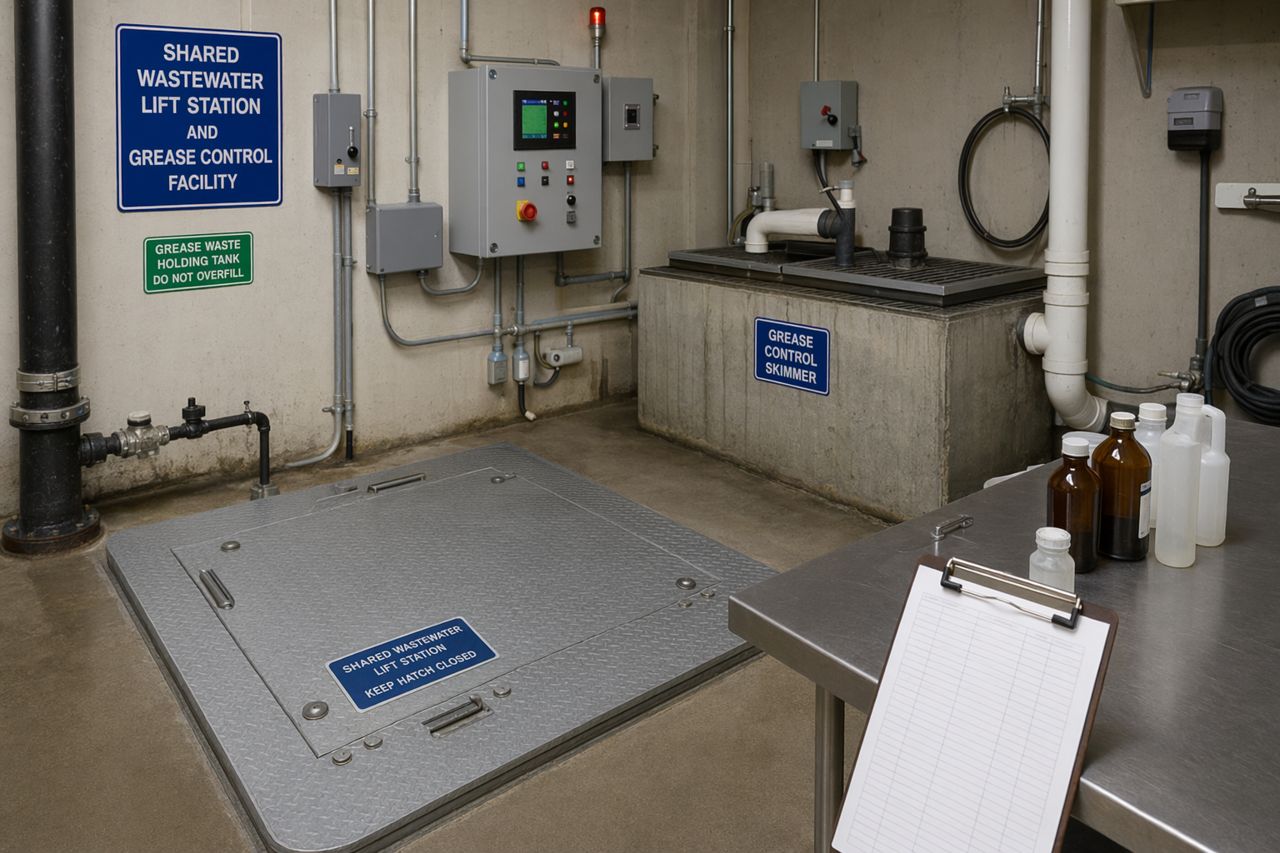
Grease is one of the most common sources of pretreatment instability in mixed industrial parks. It can accumulate in laterals, lift stations, wet wells, equalization tanks, and aeration basins. When grease breaks loose as a slug, it can drive odors, interfere with oxygen transfer, coat sensors, increase skimming needs, and contribute to discharge exceedances.
Controls that reduce grease risk
A reliable grease strategy usually combines several measures:
- Tenant-side source control and dry cleanup before washdown
- Correctly sized interceptors or separation equipment
- Scheduled pump-out and inspection documentation
- Screens or strainers where solids carry grease downstream
- Equalization to reduce shock loading
- Enzyme blend programs designed to support breakdown of grease-rich organic residues
- Trend monitoring at shared collection points
Enzyme blends should not be used as a substitute for basic housekeeping or mechanical separation. Their value is strongest when they are part of a managed pretreatment program that reduces buildup, supports more consistent organic breakdown, and helps protect downstream operations.
Plan for peak flow, not just average flow
Industrial park wastewater planning often fails when operators size decisions around averages. The treatment system may handle the daily total but struggle during concentrated release windows.
Peak-flow triggers include:
- Multiple tenants cleaning at the end of a shift
- Truck wash or tote wash activity during limited windows
- Batch tank dumps
- Weekend or Monday startup discharges
- Seasonal production campaigns
- Rainwater intrusion into process drainage or shared infrastructure
Equalization is one of the most effective tools for smoothing hydraulic and organic variability. Where equalization is limited, operators can still reduce risk through tenant scheduling, discharge windows, valve controls, or holding requirements.
Monitoring should support action, not just reporting
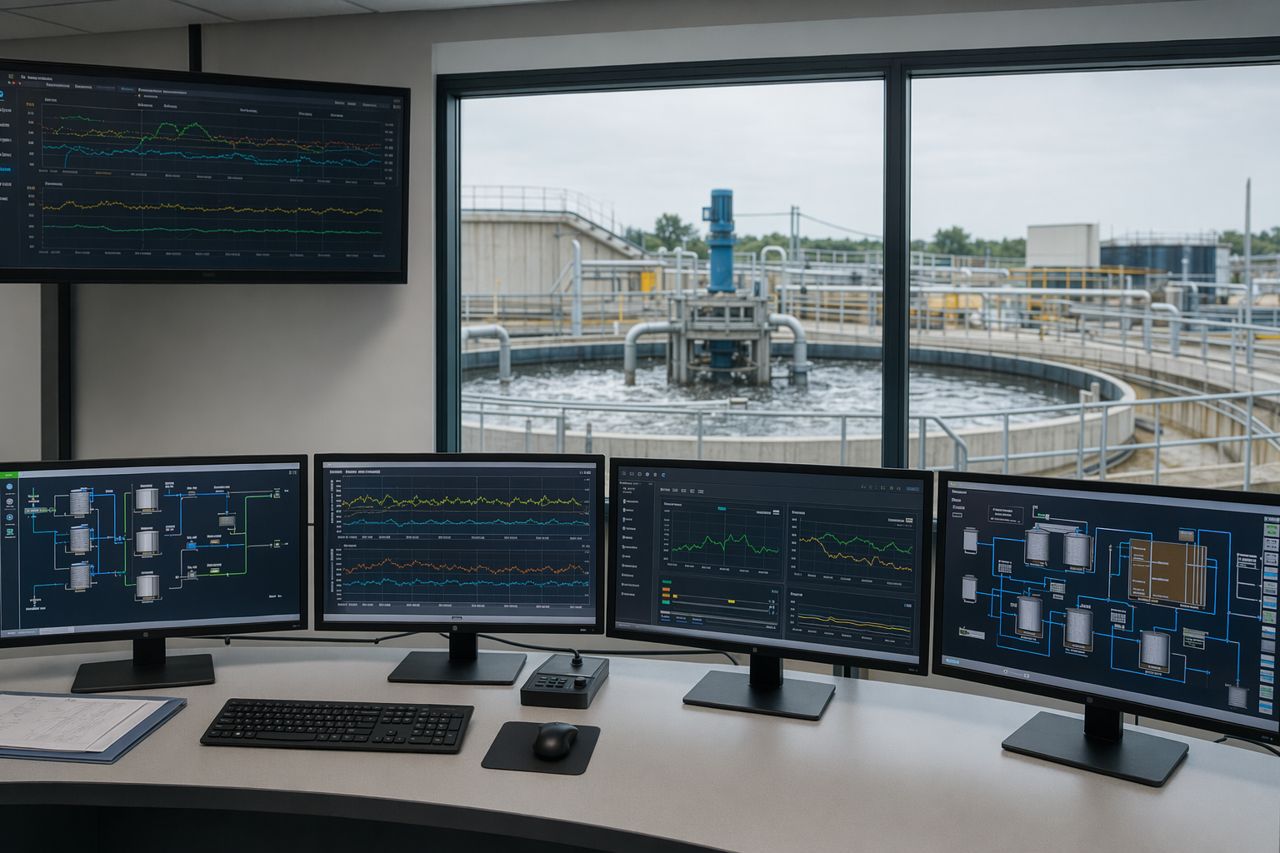
Monitoring is most useful when it helps operators identify patterns and intervene early. For industrial parks, the key is to monitor both shared system performance and contributor behavior.
Practical monitoring points
Consider a tiered approach:
- Tenant discharge points for high-risk contributors
- Shared laterals before flows combine
- Lift stations and wet wells where grease or solids accumulate
- Equalization tank influent and effluent
- Pretreatment system influent and discharge
- Odor, foam, sludge, and skimmings observations
What to trend
Useful indicators may include:
- Flow timing and peak events
- pH variation
- Temperature shifts
- Visual grease and solids accumulation
- Odor complaints or nuisance events
- Hauling frequency for grease, sludge, or scum
- Municipal surcharge drivers and exceedance patterns
- Maintenance callouts for pumps, sensors, and lines
The objective is to connect operational events with tenant activity. Once patterns are visible, the park can adjust schedules, pretreatment requirements, enzyme blend application points, or cost allocation.
Where enzyme blends fit in pretreatment programs
Bulk enzyme blends for industrial wastewater treatment are often considered when a shared system faces persistent organic loading, grease accumulation, odor pressure, or inconsistent pretreatment performance.
In industrial park settings, enzyme blends may be evaluated for:
- Grease-rich wastewater collection lines and lift stations
- Equalization tanks receiving mixed organic residues
- Pretreatment systems handling food, beverage, packaging, or washdown wastewater
- Odor-prone areas where organic buildup creates nuisance conditions
- Maintenance reduction programs where buildup drives frequent cleaning
A good specification should consider the wastewater profile, application point, retention time, temperature range, pH conditions, solids burden, cleaning chemicals, and operational objectives. The blend should be matched to the actual discharge profile rather than selected as a generic additive.
Build cost allocation around evidence
Cost allocation becomes difficult when several tenants share one system. If a park relies only on total water use, high-strength dischargers may be undercharged while lower-impact tenants subsidize the system.
More defensible models consider:
- Flow volume
- Strength or load contribution
- Grease and solids impact
- Frequency of peak events
- Pretreatment equipment requirements
- Maintenance and hauling costs linked to specific areas
- Compliance risk created by tenant practices
Clear allocation rules encourage better behavior. When tenants understand that poor source control can increase their costs, they are more likely to maintain interceptors, avoid improper dumping, and coordinate batch releases.
Operational checklist for industrial park managers
Use this checklist to strengthen pretreatment control:
- Map each tenant’s wastewater sources and discharge points.
- Identify high-risk contributors for grease, solids, pH, detergents, or organic load.
- Confirm tenant-side pretreatment equipment is sized, maintained, and documented.
- Review cleaning schedules and batch-release practices.
- Evaluate equalization capacity against peak discharge scenarios.
- Establish monitoring points before and after major mixing locations.
- Track maintenance events, odors, hauling, surcharge costs, and exceedances.
- Define cost allocation rules in lease language or service agreements.
- Evaluate enzyme blend support where organic buildup or grease loading is persistent.
- Review the program whenever tenants, products, or production schedules change.
Watch: 60-second faceless explainer
[Embed the faceless explainer video here: industrial park wastewater pretreatment, multiple tenant contributors, monitoring, grease control, peak-flow planning, and enzyme blend support.]
Request a quote for a wastewater enzyme blend
If your industrial park is managing mixed wastewater contributors, shared pretreatment risk, or recurring grease and organic loading issues, our technical team can help review your operating conditions and recommend a bulk enzyme blend approach.
Use the on-site request form to share your wastewater profile, application point, treatment goals, and purchasing requirements. We will respond with a practical quote and next-step guidance for your facility.